Children are not small adults. Their skin is thinner and more absorbent and their systems more sensitive, so aromatherapy around children calls for real caution — much more dilution, far fewer oils, and a low bar for asking a professional first.
This article is general information, not medical advice. For an unwell child, a doctor comes first. Essential oils, where used at all, are a gentle comfort at the edges — never a treatment for illness.
A cautious approach
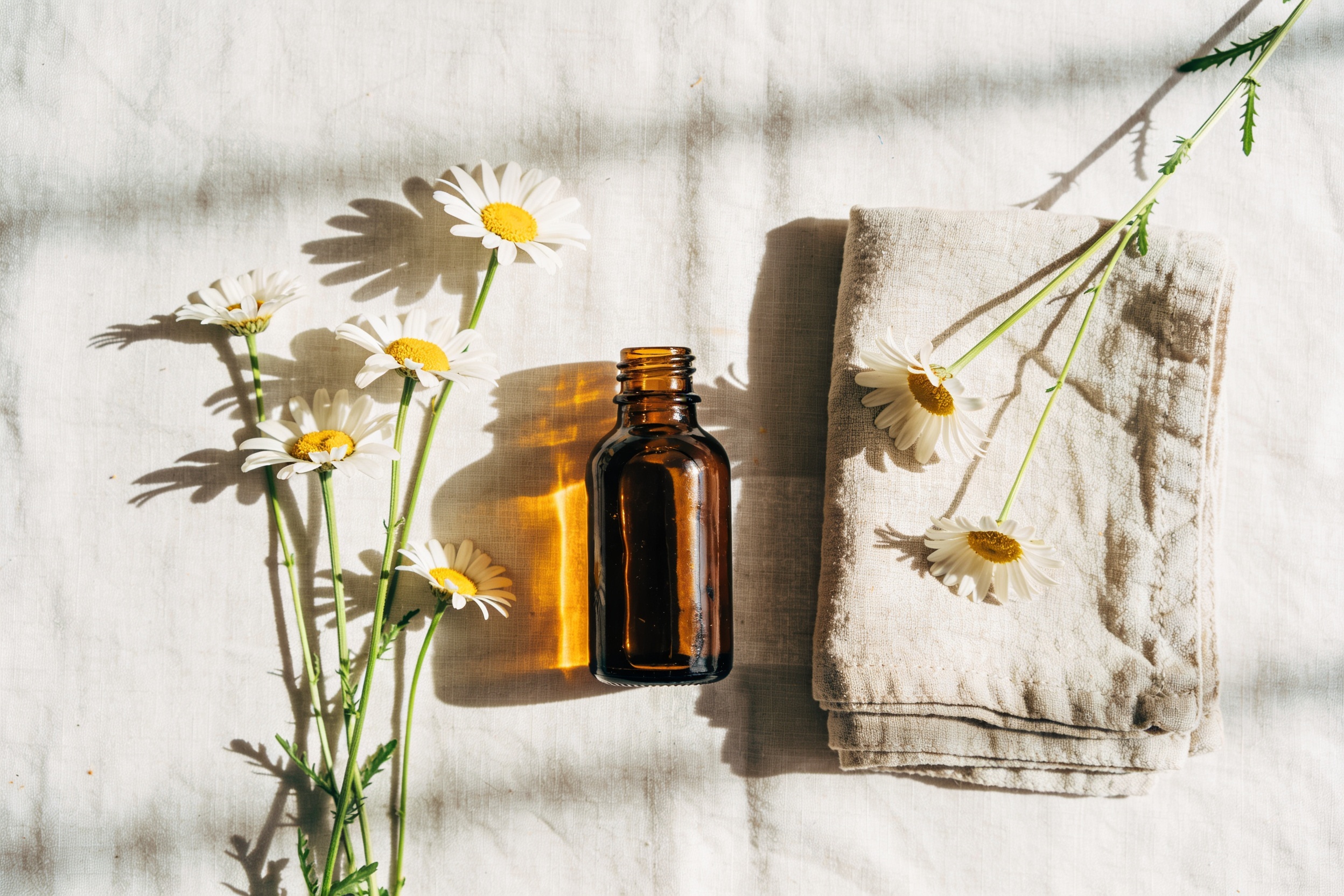
The younger the child, the more careful you must be. Essential oils are generally not recommended for babies, and for young children only a small number of the mildest oils are considered, heavily diluted and usually only diffused rather than applied. Roman chamomile and lavender are the two most often mentioned for their gentleness.
Oils to avoid
Many oils are too strong for children and are best avoided entirely, including peppermint, eucalyptus, rosemary, and the spice oils such as clove and cinnamon. Anything sharp, cooling or 'medicinal' should be left out. When in doubt, leave it out.
- Keep all essential oils well out of reach — they are harmful if swallowed.
- Diffuse in a well-ventilated room, for short periods, never in a closed nursery.
- Dilute far more than you would for an adult, and patch-test first.
- Stop at once if there is any irritation, and check with a doctor or a qualified aromatherapist before using oils on a child at all.
The gentlest comforts
For an overtired or restless child, a single drop of lavender in a diffuser across the room, or a lightly scented pillow at a distance, is the kind of use most often considered. Warmth, calm and rest do most of the work; the scent is a small, pleasant accompaniment — and only ever with proper guidance.