Aromatherapy and essential oils are often spoken of in the same breath, and rightly so — the oils are the material, and aromatherapy is the practice of using them. It helps to understand the material first.
An essential oil is the concentrated, aromatic liquid drawn from a plant. It carries the plant's scent and many of its active compounds in a highly concentrated form — which is why a single drop is potent, and why the oils are almost always diluted before they touch the skin.
How they are made
Most essential oils are produced by steam distillation: steam is passed through the plant material, carrying off the volatile oil, which is then separated from the water. Citrus oils are usually cold-pressed from the peel instead. A few delicate flowers, such as jasmine and rose, give an absolute rather than a distilled oil, extracted by other means. Synthetic 'fragrance oils' are a different thing entirely and are not used in true aromatherapy.
Families of oils
It helps to think of oils in families, because oils within a family tend to share a character and to blend well together:
- Florals — lavender, rose, geranium, ylang ylang, chamomile: soft and calming.
- Citrus — orange, lemon, bergamot, grapefruit: bright and uplifting.
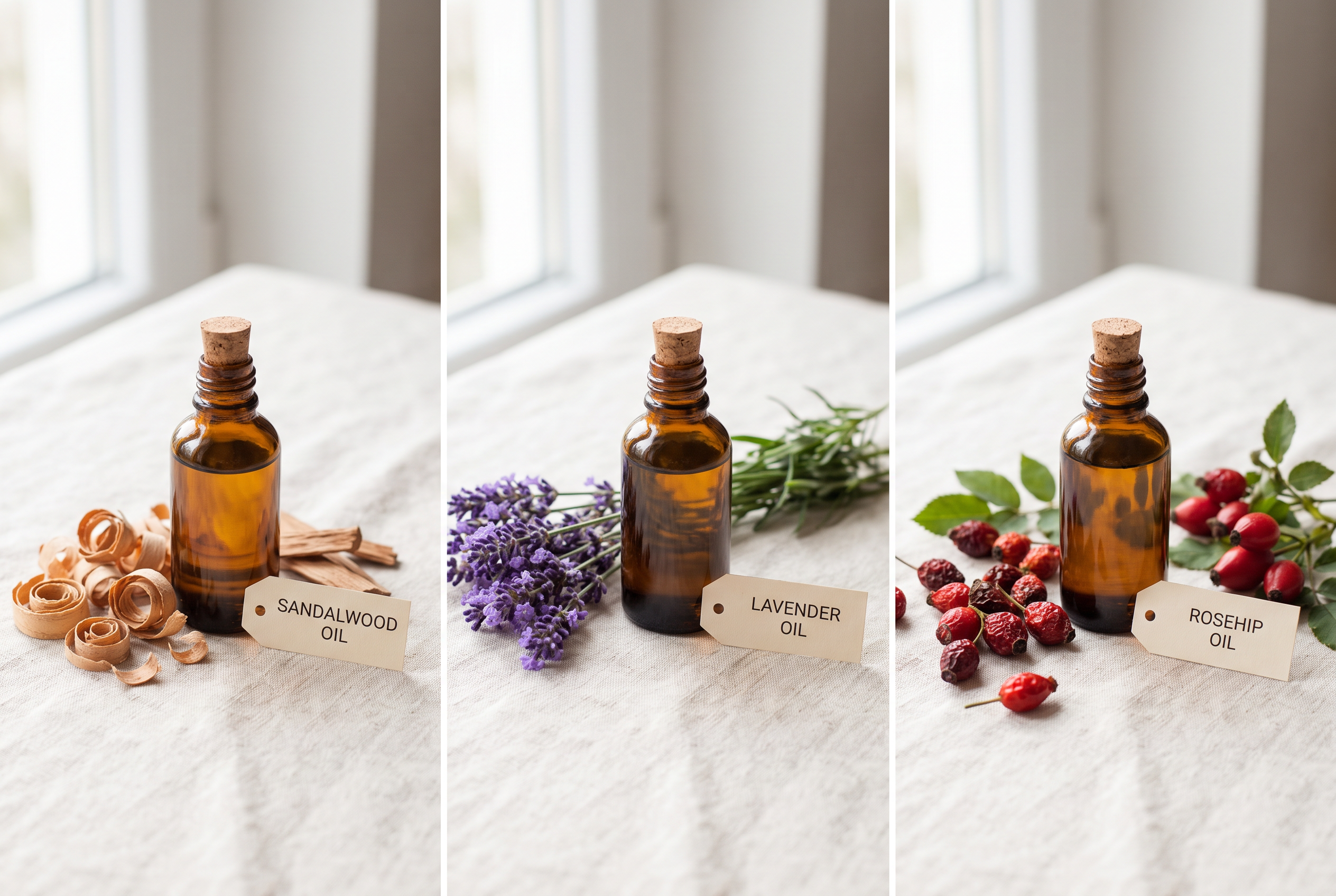
- Woods and resins — sandalwood, cedarwood, frankincense, myrrh: warm and grounding.
- Herbs — rosemary, peppermint, eucalyptus, basil: fresh and reviving.
- Spices — clove, cinnamon, ginger, nutmeg: warm and strong, to use sparingly.
Carrier oils
Alongside the essential oils sit the carriers — sweet almond, grapeseed, jojoba, rosehip and others. These are gentle vegetable oils used to dilute essential oils for the skin. They have little scent of their own and let you apply an oil safely.
Where to begin
A small starter shelf — lavender, sweet orange, eucalyptus, a wood such as sandalwood or cedarwood, and a bottle of sweet almond carrier — covers most of what a beginner wants to try. Browse the full range on our essential oils page, and see the recipes for blends to make with them.