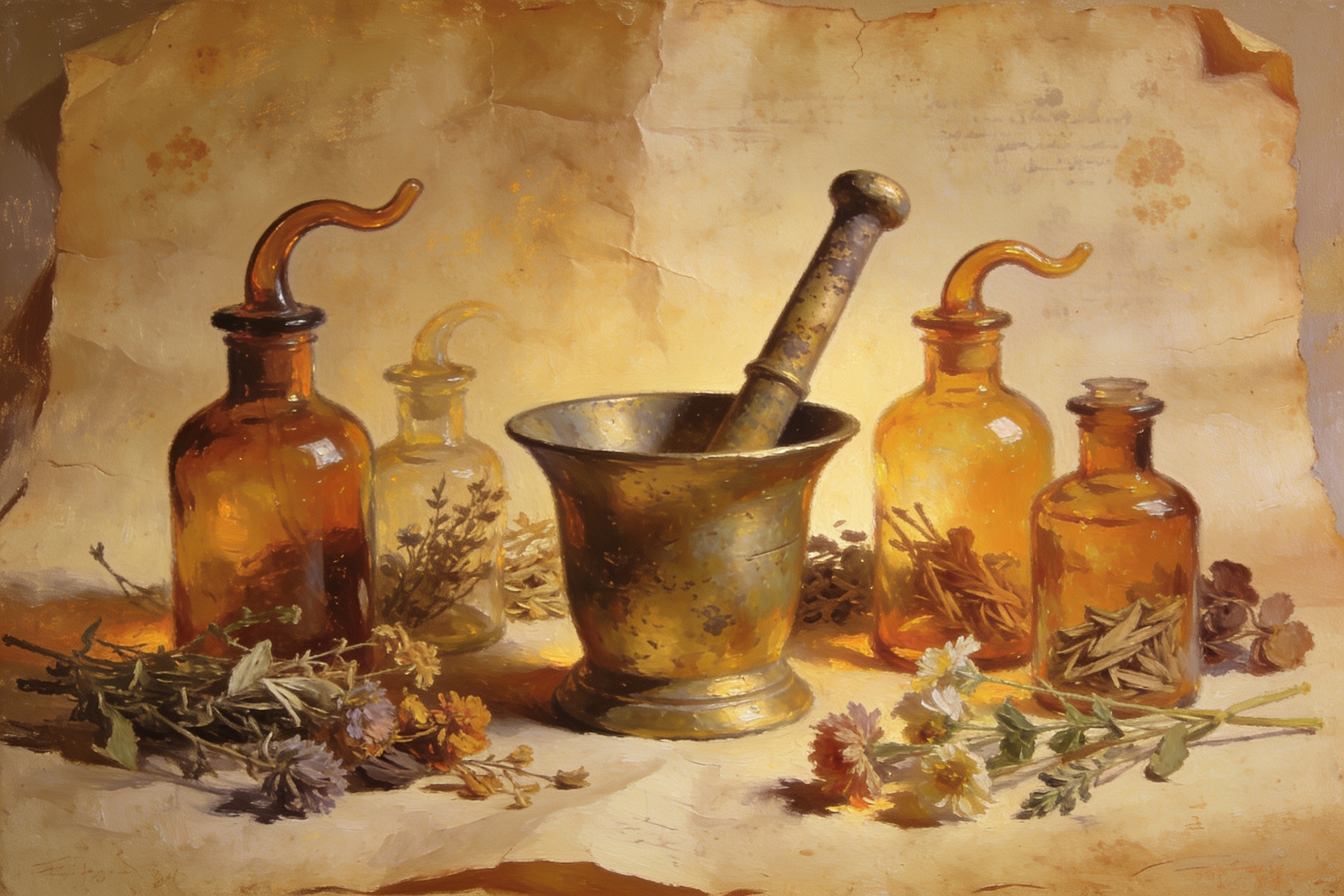
Aromatic plant oils are among the oldest medicines and luxuries we know of. Long before the word aromatherapy existed, people across the ancient world were pressing, steeping and burning plants for their scent.
In Egypt, fragrant oils and resins were central to daily life, ritual and embalming; frankincense and myrrh were traded like treasure. Cedarwood, cinnamon and spikenard appear again and again in temple records — the earliest working perfumers were often priests.
The Greeks and Romans inherited and expanded this knowledge. Greek physicians wrote about the properties of aromatic plants, and Roman bathhouses were thick with scented oils used after bathing and massage. Trade routes carried spices and resins across the known world, and with them the practices for using them.
East and West
In China and India the traditions ran just as deep. Aromatic herbs were woven into systems of medicine — Ayurveda in India, and the herbal pharmacopoeia of China — that treated the whole person rather than a single symptom. Sandalwood, patchouli and ginger were valued for scent, ceremony and health alike.
The art of distillation
The step that made modern essential oils possible was distillation — passing steam through plant material to capture its volatile oil. Refined by Persian and Arab scholars around a thousand years ago, distillation spread into Europe and slowly turned the perfumer's craft into something closer to chemistry.
By the time the word aromatherapy was coined in the twentieth century, it named something very old: the deliberate use of a plant's aromatic essence to support body and mind. What has changed is our precision, not the instinct behind it.