Beyond a scented candle or a pre-packaged bath salt, real aromatherapy can seem daunting — all those little bottles and fancy blends. It is easier than it looks, and getting started opens up a world of effective, natural remedies that can lift your mood and calm your nerves.
Aromatherapy is the practice of using essential oils — the aromatic compounds of plants, drawn out by steam distillation and other methods. Each oil holds hundreds of volatile compounds, most of them remarkably compatible with the human body. They act on us much as they do on the plant: as chemical messengers through our sense of smell and limbic system, and as defenders through their antibacterial and antiviral qualities.
Oils are best used in one of two simple ways: inhaled, where they reach the brain directly, or applied to the skin in a carrier oil, where they are absorbed. (Oral use is possible only under experienced medical supervision — some oils are toxic, and others should be avoided in certain conditions. If you are pregnant or have specific medical needs, consult a knowledgeable practitioner first.)
Inhaling essential oils
Inhaled oils act on the limbic system, the brain's emotional centre. Many sharpen concentration, ease tension and anxiety, even lift low mood. Three simple, low-cost methods work well: the handkerchief, home-made smelling salts, and a room mister.
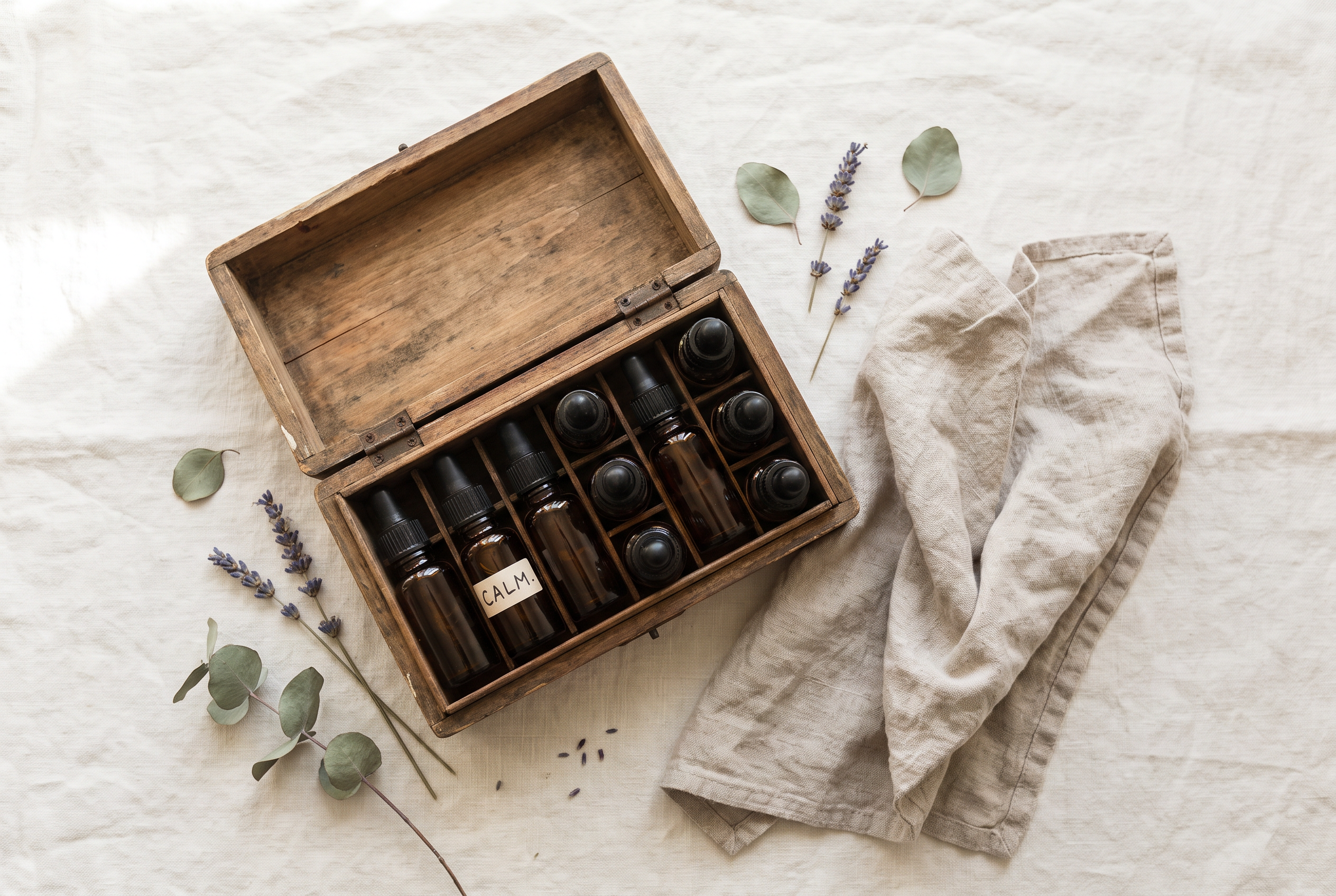
For the handkerchief, put a drop or two on a tissue and inhale — take care with strong oils like peppermint, which can sting the skin around the nose. For smelling salts, fill a small dark-glass vial with sea salt and add oil until there is a clear aroma; unscrew and inhale when you need a lift. For a mister, add oils to water in a spray bottle, shake before each use, and spray.
A few starting blends (treat the drops as a ratio you can scale up or down):
- Uplifting: 4 drops rosemary, 3 lavender, 2 lemon, 1 peppermint — or 3 clary sage, 2 bergamot, 1 sweet orange.
- Calming: equal parts Roman chamomile, bergamot and orange — or 3 lavender, 2 neroli, 1 bergamot.
- Harmonious: 3 jasmine, 1 ylang ylang, 1 sandalwood — or equal parts geranium, patchouli and bergamot.
Aromatherapy massage
For the topical method, make a massage oil by diluting 10–20 drops of essential oil per ounce of carrier. Sweet almond is a fine all-round carrier. Any technique will do — let your intuition guide you, and research acupressure points later if you want to go further.
- Sensual: per ounce of carrier, 8 drops sandalwood, 6 rose, 4 lavender, 2 ylang ylang.
- Opening the heart: 4 drops spikenard, 4 lavender, 2 rose.
- Sheer relaxation: 6 drops lavender, 4 neroli, 2 bergamot.
Blend your own
Don't be afraid to experiment — the oils you enjoy most are often the ones that work best for you. Change ratios slowly: start with one drop of each in a small vial, let it settle a few minutes, then add a drop at a time. As a rough guide, citrus oils (orange, bergamot, lemon, lime) bring calm alertness, herb oils (peppermint, rosemary) invigorate, and florals (lavender, chamomile, jasmine, neroli) relax. Let your nose lead.